
“Make some noise if you love to read!”
I could barely make out the last word before the entire playground erupted in cheers. To add excitement to the already-pumped up crowd, the DJ transitioned into Golden. Even kids who had chosen monkey bars over the dance party were now convinced to join the blacktop dance floor.
Teachers danced with kindergarteners. Fifth graders showed off their moves. When Let It Go came on, third graders did dramatic renditions and second graders belted the high notes.
The cause for celebration? The annual Read Around.
Now that my kids have moved on to middle and high school, I am just a neighbor to the elementary school across the street. Having been a Read Around parent, though, I knew that this school did everything it could to make it magical. The library media specialist turns the school library into “Camp Read-A-Way” and students curl up inside tents to read by flashlight. Students design art for t-shirts. Educators make storytelling an accessible and irresistible activity. Local children’s authors and illustrators visit classrooms.
And apparently this year, a DJ in a Vikings jersey turns the school blacktop into an uninhibited book-joy-dance-party. I’ve never been more grateful to have such a close up view to this Minneapolis public school.
Book Joy
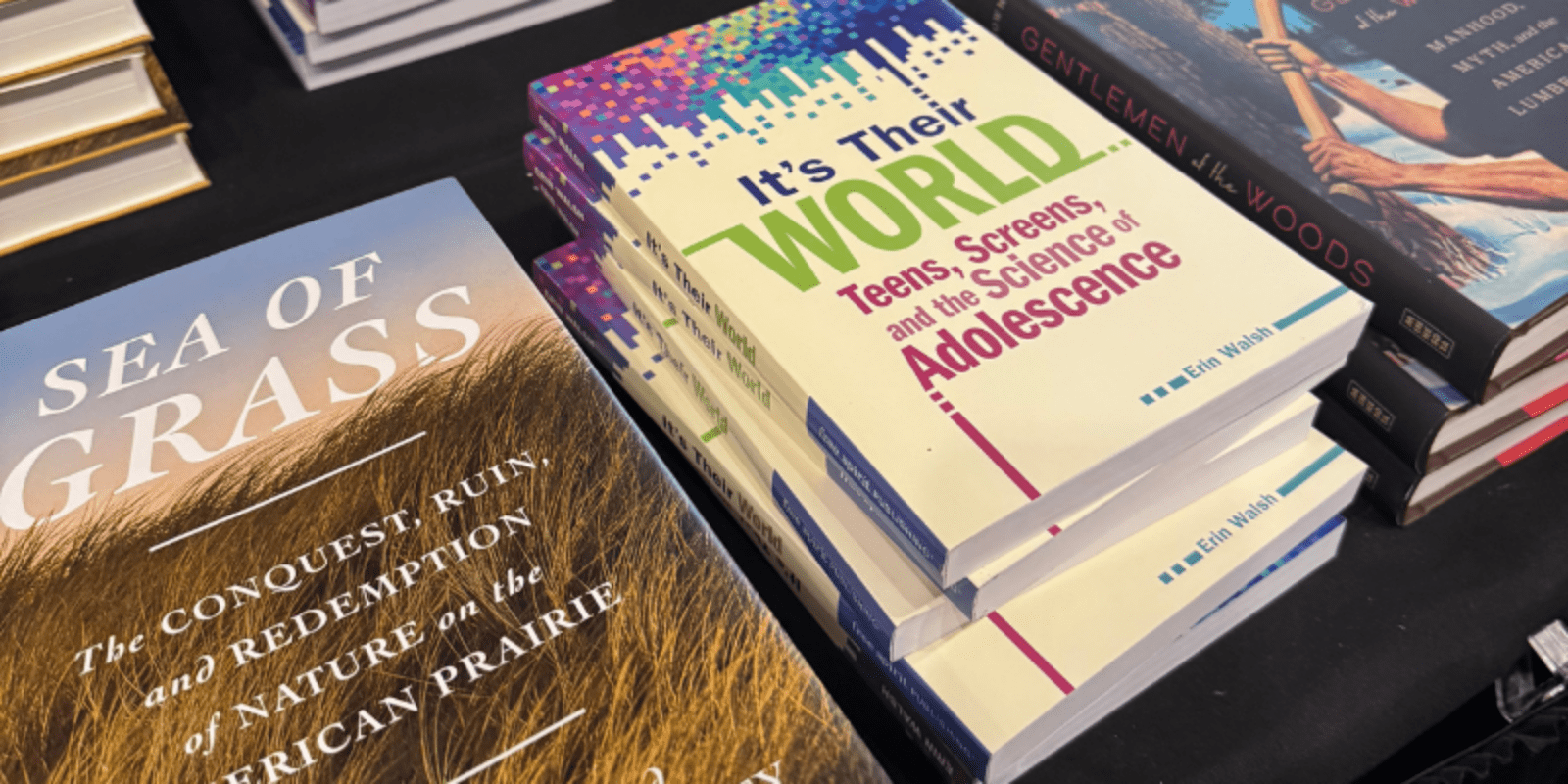
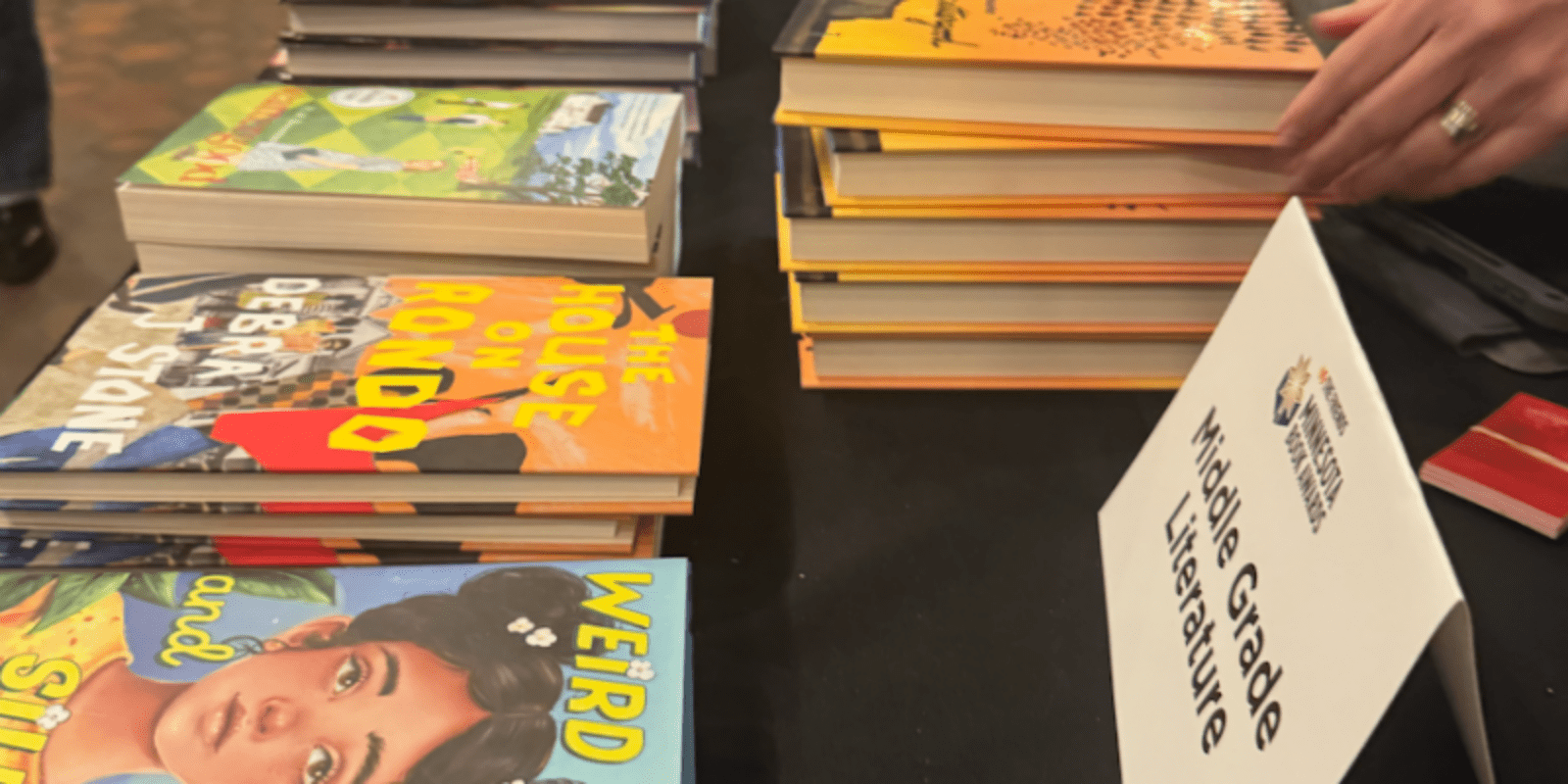
Just last night, I attended the Minnesota Book Awards as a finalist for my book It’s Their World: Teens, Screens, and the Science of Adolescence. Instead of a DJ there was a live band and the event was held inside instead of on a playground. But there was book joy. The entire evening was a love letter to libraries, librarians, books, stories, and the ways that these texts and spaces are key to our collective wellbeing.
Research has long told us that stories do something singular for our social development. In her piece “Mirrors, Windows, and Sliding Glass Doors,” Dr. Rudine Sims Bishop reminded us that stories reflect back who we are, help us view different perspectives, and draw us so fully into other worlds that it changes us.
At the ceremony, author after author spoke about the power of stories to help us see ourselves better and turn toward each other with more empathy and compassion. The backdrop of accelerating book bans and shrinking school library budgets brought the value of this message into sharp relief. We celebrated books about grasslands, immigration, family, grief, bullying, Black identity, mystery, and hidden histories. This collection of books helps us better understand who we are (in the most expansive sense of we) and ignite our imaginations of who we might be (in the most expansive sense of what we might build together).
It’s Our World
In my own category, general non-fiction, all of the other nominees wrote books about nature. At a recent panel event, author of Enchanted Plants Varla Ventura noted, “The plant world has so much to teach us about who we are as people.”
This comment put my book right at home alongside the other finalists. For a book about teens and technology, It’s Their World is as much about what it means to be human as it is about social media. It’s as much about helping young people explore questions like “Who am I?” “Where do I belong?” and “How can I contribute?” as it is about cell phones.
Exploring these questions during adolescence can be exciting and exhilarating but can also be deeply painful and lonely.
One author told the audience that he was the target of frequent and cruel bullying as a teenager. He felt alone and overwhelmed much of the time. His refuge? The school library. The library was a space where he could experience the care and protection of trusted adults. It also offered shelf after shelf of stories that communicated to him, you belong here. In the library, he encountered stories that invited him into our world at a time when he wanted to retreat from it.
Light in the Dark
Beloved Minnesota author, Kate DiCamillo, has been recognized multiple times by the Minnesota Book Awards. She was also, it turns out, part of this year’s Read Around in Minneapolis Public Schools. I learned about her author visit when I noticed an autograph on my niece’s shoe. In lieu of having a book to sign, my niece offered up her footwear and Kate was generous enough to oblige.
If you have read Kate’s books, you know that her stories often feature animals. A mouse in love, a squirrel with super powers, and a loyal dog. Readers fall in love with these characters (so much so that they want her to sign their shoes). But her stories are far from frivolous retreats from reality. In an interview with Krista Tippett on the podcast On Being, she noted:
“Kids are…aware of everything that’s going on, and what a disservice not to talk to them. And also, at the same time, what a disservice not to offer them hope and love, because that’s what stories do, too. But they also need to tell the truth. And the truth is that it’s really difficult to be here. It is a huge gift to be here. It’s beautiful here. And it’s also challenging.”
The Read Around came at the perfect time for Minneapolis students. My niece’s school is just blocks in one direction from where Renée Good was killed by an ICE agent this past winter and just blocks in the other direction from where George Floyd was killed in 2020. Many of the students attending school across the street from my house spent January and February trapped in their homes. All of these students are still emerging from a time marked by dehumanizing violence, chaos, and uncertainty.
How can we dance at a time like this?
In a letter from Kate DiCamillo to another author about her approach to honesty with readers, she wrote:
“So that’s the question, I guess, for you and for me and for all of us trying to do this sacred task of telling stories for the young: How do we tell the truth and make that truth bearable?”
She also references E.B. White’s Charlotte’s Web, a book that children read over and over again not because they think it will end well. But because they know it is beautiful and that they can bear it. She wrote, “In loving the world, he told the truth about it — its sorrow, its heartbreak, its devastating beauty. He trusted his readers enough to tell them the truth, and with that truth came comfort and a feeling that we are not alone.”
Book Joy Revisited
I have such a strong memory of reading Kate DiCamillo’s book Despereaux out loud to my youngest child, his small body curled up next to me. Despereaux is a small mouse trying to be brave on a very dangerous quest. He is different from the other mice because he loves art, storytelling, and isn’t afraid of humans. I could barely finish the book because I was crying. My youngest asked me, “Are you crying because it’s sad? Or because it’s beautiful?”
“Both,” I responded.
“Yeah,” he said, “both.”
Make some noise if you love to read. How can we not dance at a time like this?
“’Once upon a time’,” he said out loud to the darkness. He said these words because they were the best, the most powerful words that he knew and just the saying of them comforted him.”
– Kate DiCamillo, Despereaux